

You have the pattern. You have a yarn you keep picking up and squeezing every time you walk past the shelf. The only thing standing between you and the first cast-on is a small, stubborn question printed on the ball band: is this actually the right weight? Sweater yarn choice is where most beginners get stuck, and it is rarely because they picked something terrible. It is because yarn weight sounds like a fixed fact when it is really a range, and because the pattern's gauge line looks like fine print rather than the most useful sentence on the page. Get those two ideas straight and the rest of the decision becomes much calmer.
Weight Is a Range, Not a Ruling
Yarn companies label their yarns in numbered categories, from 0 (lace) up to 6 (super bulky). Those numbers are a useful shorthand, not a legal classification. Two yarns both labelled worsted can behave differently enough that one gives you 18 stitches per four inches and the other gives you 20 — and on a sweater, that difference is a size, sometimes two.
That is why the gauge line on a pattern matters more than the weight number. A pattern telling you it works at 20 stitches and 28 rows to four inches in stockinette has told you far more than "use worsted." It has told you the fabric it wants. Your job is to find a yarn that produces that fabric, whatever number is printed on its label.
Fibre matters here too. A springy wool and a smooth cotton spun to the same thickness will knit up at different gauges and hang completely differently. A cotton sweater at 20 stitches per four inches feels dense and heavy; the same gauge in wool feels light and elastic. Weight gets you into the neighbourhood. Fibre decides which house on the street you end up in.
The Standard Categories in Plain Terms
Here is roughly what each category means in practice, using typical stockinette gauge. Treat these as starting points, not promises.
- Lace (0): Very fine, often 30 stitches or more per four inches. Rare for everyday sweaters, but beautiful held double or for open, airy summer pieces.
- Fingering (1): Roughly 27–32 stitches. Slow, fine work with lovely drape. Expect a lightweight sweater that takes a long time and a lot of yarn.
- Sport (2): Around 23–26 stitches. A nice middle ground for lightweight garments that still move along at a reasonable pace.
- DK (3): Around 21–24 stitches. Widely loved for sweaters because it is fine enough to look polished and thick enough to finish before winter ends.
- Worsted (4): Around 16–20 stitches. The classic sweater weight in many patterns, with clear stitch definition and dependable warmth.
- Bulky (5): Around 12–15 stitches. Fast, cosy, and less forgiving of fit issues because the fabric is thick.
- Super bulky (6): Around 7–11 stitches. Dramatic and quick. Best on simple shapes; cables and shaping can get lost in the bulk.
If you are choosing your first sweater yarn, DK and worsted are the kindest teachers. The knitting is manageable, the fabric is forgiving, and a wide range of patterns is written for them.
Read the Ball Band Like a Knitter
Look past the colour name and find three numbers: the suggested gauge, the recommended needle size, and the yardage per ball. The gauge and needle size give you a hint about the fabric the manufacturer intended. The yardage is the one beginners forget, and it is the one that ruins good plans.
Yardage per ball varies wildly. A 50 g ball of one yarn might hold 100 metres; another might hold 170. Patterns list requirements in metres or yards, not in balls, precisely because of this. Multiply the pattern's total by a small safety margin — ten percent is a sensible habit — and buy from the same dye lot if you can.
A five-second test you can do in the shop
Wrap the yarn around a ruler for an inch and count the wraps. This is wraps per inch, and it is rough but genuinely useful. Hold your result against the gauge the pattern asks for. If you are off by a lot, no amount of swatching enthusiasm will fix it, and you can put the ball back with a clear conscience.
The Swatch Is the Whole Conversation
A swatch is not homework. It is a small, cheap rehearsal of the garment you are about to spend weeks on. Skipping it and hoping is how a sweater ends up too wide in the shoulders and short in the body.
- Cast on enough stitches to make a swatch at least 15 cm (6 in) wide. Edge stitches curl and distort; you need a calm middle to measure.
- Work in the stitch pattern the pattern specifies — usually stockinette, sometimes a textured stitch. Knit a few rows of garter at each end to stop the swatch rolling.
- Bind off loosely, then wash and block the swatch exactly as you will wash the finished sweater. Wool grows. Cotton can shrink or drop. This step changes the numbers, which is the point.
- Let it dry completely flat, then measure across the middle with a rigid ruler. Count stitches over 10 cm (4 in) and compare with the pattern gauge.
- Too many stitches? Go up a needle size. Too few? Go down. Change one variable at a time and swatch again.
If you match stitch gauge but your row gauge is off, do not panic. Most sweater patterns are written by length rather than by row count, so you can knit to the measurement given. Stitch gauge is the one that governs fit.
One honest swatch saves more knitting time than any shortcut you will ever find. It is the cheapest part of the whole project.
Substituting Yarn Without Regret
You found a pattern calling for a yarn that has been discontinued, or that costs more than you want to spend. Substitution is normal. Match the gauge first, then compare fibre content and put-up, then do the yardage arithmetic.
Light yarns go further per gram, so a fingering-weight sweater can easily need nearly twice the yardage of a worsted sweater in the same size. Write the total down before you buy. Running short mid-sleeve in a discontinued dye lot is a genuinely sad way to end a project.
Consider the fibre's job, too. A wool-cotton blend will drape and breathe differently from pure wool. If the pattern relies on elasticity for a close fit, a plant-fibre substitute may sag where you wanted it to hold. If the pattern is a loose, boxy shape, a drapier yarn is often an improvement.
When It Is Fine to Ignore the Label
Plenty of experienced knitters hold two strands of fingering together to approximate a DK or worsted gauge. This is a legitimate technique, not a cheat, and it is a good way to use a fine yarn you love in a heavier pattern. Swatch it, obviously, since two strands rarely behave exactly like one thicker yarn.
You can also deliberately knit a pattern at a different gauge, but only if you are willing to recalculate the numbers — the shaping, the armhole depth, the sleeve cap. For a first or second sweater, follow the pattern's gauge and save the maths for later.
A Simple Order of Operations
Find the gauge line first, not the weight number. Check the yardage the pattern requires and add a ten percent buffer. Choose a yarn whose fibre suits the shape you want — springy for fitted, drapey for loose. Swatch, wash, dry, and measure before you commit to the full project. If the numbers land within a stitch or two of the pattern, cast on with confidence.
The rest is just knitting, row after row, with the quiet certainty that the sweater will fit the person it was always meant for.
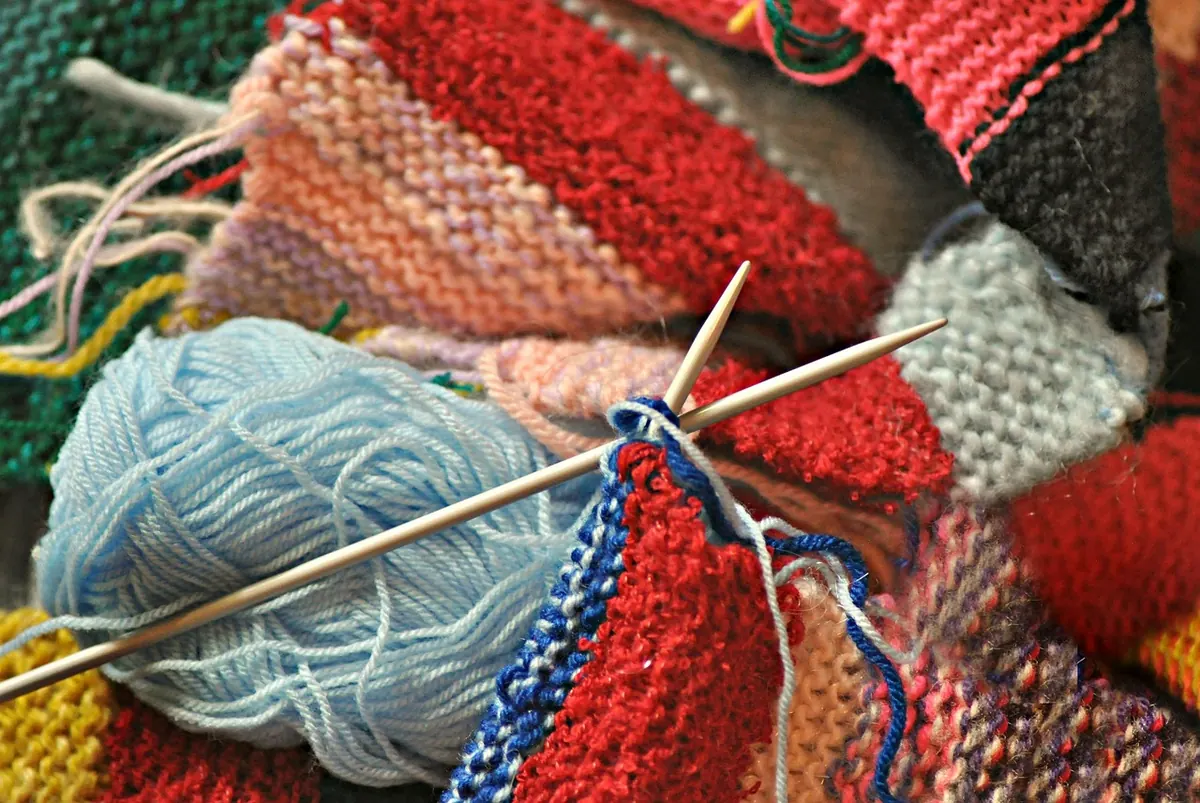
Photo: MabelAmber / Pixabay