

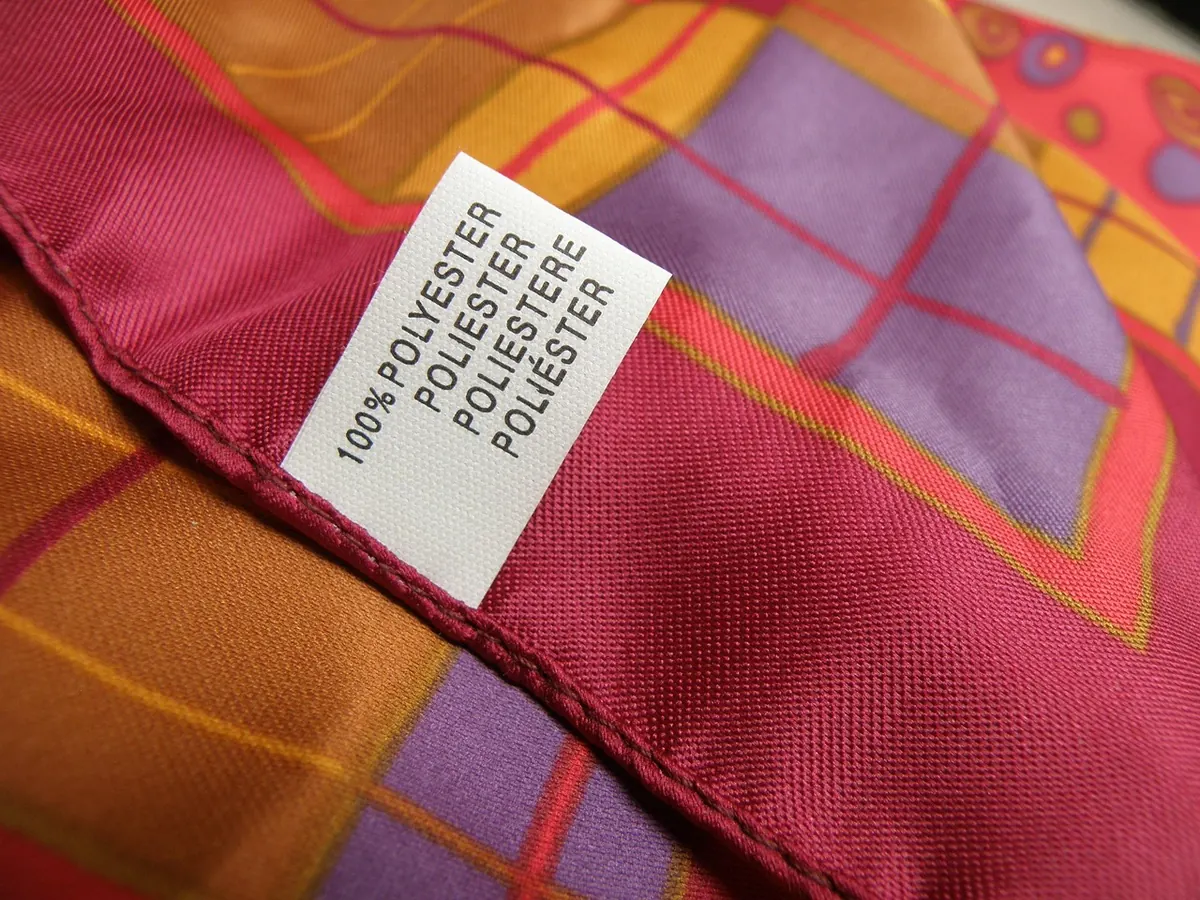
A care label is the smallest piece of documentation most of us own, and the least read. Five grey symbols on a scrap of nylon decide whether the jumper you spent three weeks knitting survives its first wash or comes out sized for a toddler. Most people glance at the tub, guess at the temperature, and hope.
The symbols are not cryptic by design. They belong to an international system, and once you know the five treatments they cover, reading a full label takes about four seconds. What follows is the working checklist for handmade and hand-washed textiles: what each symbol means, how to turn it into a real action, and what to do when the label is missing, faded, or written for a factory rather than a person.
The Five Treatments Behind Every Care Label
Almost every care label covers the same five treatments, and they appear in a fairly consistent sequence: wash, bleach, dry, iron, professional clean. Read the label left to right in that order and you have a complete routine.
- Washtub: water temperature and how much agitation the fabric will take.
- Triangle: bleach, and which kind.
- Square: drying. A circle inside means tumble dry; lines mean line, drip or flat dry.
- Iron: heat level, and whether steam is allowed.
- Circle: dry cleaning, including which solvents a cleaner may use.
Two modifiers run across the whole set. A single bar under a symbol means "gentler than standard"; a double bar means "much gentler". A cross through a symbol means "do not". Learn those two rules and half the label reads itself.
Translating the Washtub Into an Actual Wash
The tub carries the number that matters most: the maximum wash temperature in Celsius. A tub reading 30 means 30°C or cooler. A tub reading 40 with a single bar underneath means a gentle cycle at no more than 40°C. A tub with a hand inside means hand wash only, which in practice is a short, cool soak at no more than 40°C with minimal squeezing. A tub crossed out means the item should not be washed in water at all.
Treat the number as a ceiling, not an instruction. Washing a 40°C garment at 30°C is usually harmless; washing a 30°C garment at 60°C is how wool becomes felt and how hand-dyed cloth loses its depth of colour. When you are torn between two temperatures, choose the lower one and add time rather than heat.
The bars deserve more attention than they get. Standard machine agitation is fine for sturdy cotton and linen. A single bar suits most knits, anything with a delicate seam, and fabrics that pill. A double bar is the wool cycle: slow tumbling, low spin, and no abrupt temperature change between wash and rinse. If your machine has no such cycle, wash by hand instead of improvising. A 30°C wool cycle and a 30°C cotton cycle are not the same wash; the wool cycle moves the fabric far less, which is the whole point.
Bleach, Dry and Iron Without Guesswork
The triangle
An empty triangle allows any bleach. A triangle with two diagonal lines allows oxygen-based, colour-safe bleach only. A crossed triangle means none at all. On craft textiles, treat the empty triangle with suspicion: a piece may be technically bleachable and still lose its colour, its print or its hand-dyed character in the process.
The square
A square with a circle inside means tumble drying is permitted, and the dots inside the circle set the heat: one dot for low, two for medium, three for high. A crossed square forbids the dryer. Without a circle, the square is telling you how to air dry. A curved line near the top means line dry, a horizontal line through the middle means dry flat, and diagonal lines in the corner mean keep the piece out of direct sun. Drip dry, shown by vertical lines, means hang the wet item and let it drain without reshaping it.
The iron
Dots set the temperature. One dot is around 110°C, for synthetics, with steam usually not advised. Two dots is around 150°C, the setting for wool and silk. Three dots is around 200°C, for cotton and linen. A crossed-out iron means do not press at all, and a crossed-out steam symbol means dry heat only. Pressing on the wrong side, or through a cotton cloth, buys you a lot of forgiveness with any fibre.
A bar under any of these symbols softens the instruction; a cross cancels it. That is the whole grammar.
The Pre-Wash Checklist
Before anything touches water, run through this sequence. It takes a few minutes and saves entire projects.
- Photograph the label before the first wash. Care labels fade, fray and disappear, and a photo on your phone outlasts the tag.
- Identify the strictest instruction. A jumper might be machine washable, but if the ribbon trim is hand wash only, the garment is hand wash only.
- Check the parts the label ignores. Buttons, interfacing, elastic, beads and embroidery all have their own tolerances. Turn the piece inside out and look at how the trim is attached.
- Test an inconspicuous corner. A few drops of cool water and detergent on a hem or inside seam will show whether a dye bleeds or the weave shrinks. Blot it with a white cloth, let it dry, and compare the test patch with the rest of the piece before committing the whole item.
- Write the routine down. If the label is already faint, copy the five symbols into your project notes or onto a small card kept with the finished piece. Future you will not remember whether it was 30°C or 40°C.
What the Dry-Cleaning Circle Actually Says
The circle is the one symbol most crafters ignore, partly because handmade textiles rarely carry one and partly because "dry clean" sounds like an instruction for someone else. The circle is more specific than that. A circle with a P allows most professional dry-cleaning solvents, including perchloroethylene. An F restricts the cleaner to petroleum-based solvents. An A permits any solvent, and a W means professional wet cleaning is acceptable. A crossed-out circle means do not dry clean, while a bar underneath asks the cleaner to use a gentle process.
For textile crafts, the circle matters most on tailored pieces, structured bags, lined garments and anything with fused interfacing. A dry cleaner may be able to save a jacket that water would ruin, but the wrong solvent can also soften glue, dull beads or strip a surface print. If you are handing over a handmade piece, say what the fibre is and what the finish is, not just "dry clean only".
When the Label Is Missing or Written for a Factory
Not every handmade piece comes with a label. Much of it comes with nothing at all, or with a label written for commercial production that assumes industrial equipment and a fabric you have never handled. In that case, fall back on fibre knowledge and test swatches. Cotton and linen generally tolerate warm water and a hot iron. Wool wants cool water, low agitation, flat drying and a cool iron with a cloth. Silk prefers cool hand washing or professional care, low heat and no harsh detergent. Synthetics usually wash cool and dry low, and they are the fibres most likely to hold a crease set by the wrong iron.
The safest default for an unknown textile is the one most likely to preserve it: cool wash, gentle detergent, no bleach, flat or line dry away from direct sun, and a low iron through a cloth. That routine will not rescue a badly made piece, but it rarely causes damage.
If in doubt, wash cool, dry flat, iron low, and do not bleach. Most textile disasters come from heat, agitation and optimism.
It is also worth making your own care note for gifts and commissions. Write the fibre, the wash temperature, the drying method, the iron setting and whether bleach is allowed. A small card tucked into the package does more for the piece than a fancy tag, because it tells the next person exactly what the object needs.
A Worked Example: Reading a Whole Label
Imagine a label with a tub reading 40 and a single bar beneath it, a triangle with two diagonal lines, a square containing a circle with one dot, an iron with two dots, and a circle with a P. Read left to right, it says: gentle machine wash at no more than 40°C; oxygen-based bleach only if needed; tumble dry on low; iron at around 150°C; professional dry cleaning with most solvents is permitted.
In practice, that becomes a simple routine: turn the piece inside out, use a gentle cycle and a mild detergent, skip the bleach unless there is a real stain, tumble on low or line dry if you have time, and press on the wrong side with a cloth. The label has not told you how to live your life. It has given you a safe boundary, and that is all a care label was ever meant to do.
Photo: MAKY_OREL / Pixabay